How Can Working Hours Year Data Help Businesses Plan Smarter?
How many hours do employees actually work in a year, and why does that number matter to businesses, managers, and workers? Understanding annual working time can reveal whether schedules are realistic, workloads are sustainable, and workforce capacity matches organizational goals. Working hours year calculations are useful for planning staffing, estimating labor capacity, comparing schedules, and identifying opportunities to improve productivity without simply adding more hours.
What Does Annual Working Time Tell You?
Annual working time represents the total number of hours an employee is expected or scheduled to work over a year. The figure varies depending on the employee's contract, weekly schedule, paid holidays, vacation entitlement, public holidays, leave policies, and local employment regulations.For example, someone working a standard 40-hour week does not necessarily complete 2,080 productive hours annually. The working hours year calculation can be lower because holidays, paid leave, sick days, training, meetings, and other non-working periods reduce the time available for regular duties. Businesses can use annual working-hour estimates to understand:
- Workforce capacity
- Staffing requirements
- Project timelines
- Labor costs
- Employee availability
- Seasonal resource needs
- Overtime exposure
This makes annual hours more useful as a planning measurement than as a simple productivity score.
How Should Businesses Calculate Working Hours for a Year?
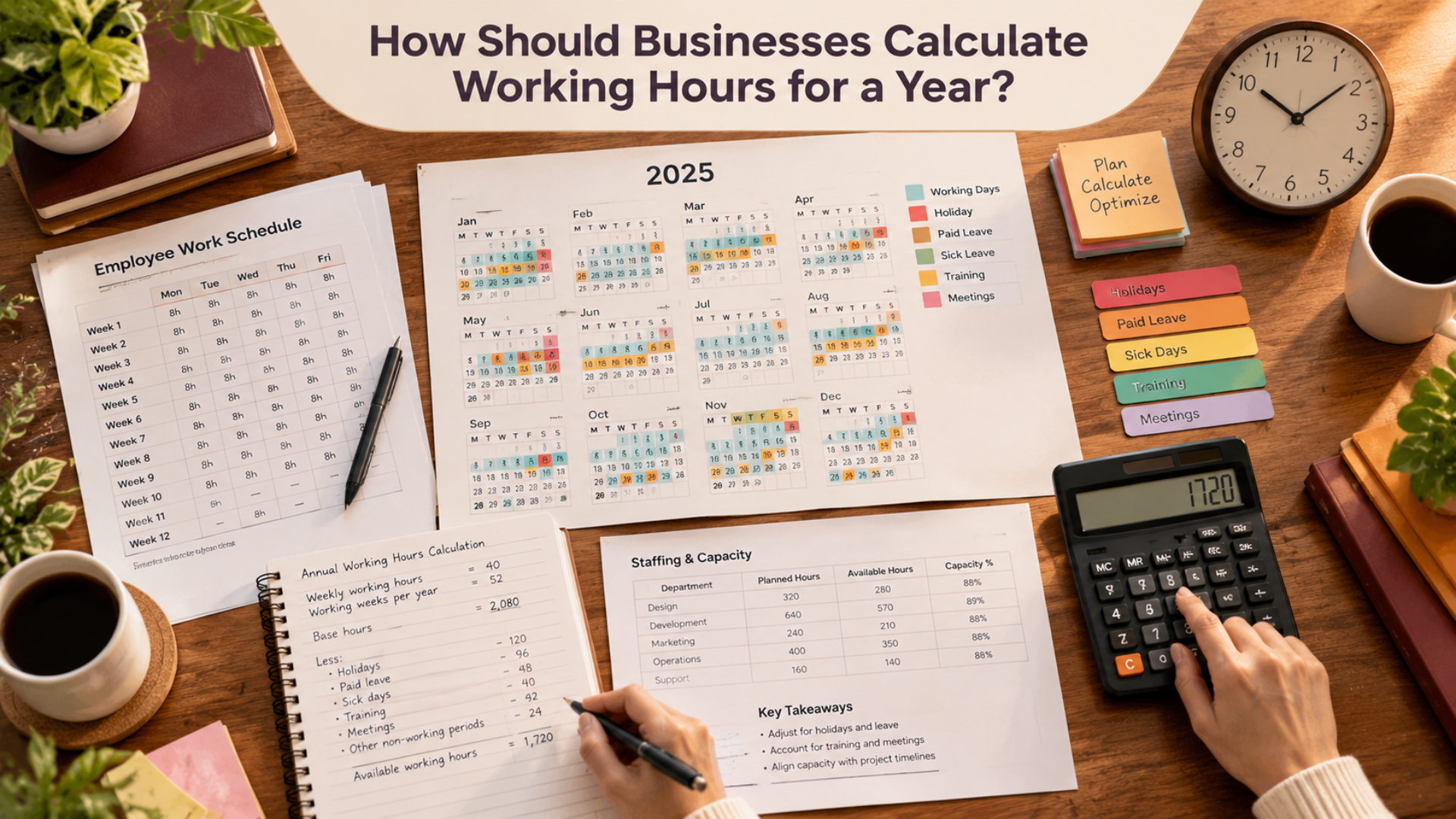
A basic calculation starts with the employee's scheduled hours per week and the number of working weeks in the year.A simplified formula is:Annual scheduled hours = Weekly working hours × Working weeks per yearHowever, organizations should adjust this calculation for holidays, paid leave, planned closures, and other scheduled absences when estimating actual available capacity.A practical calculation can follow these steps:
- Identify the employee's normal weekly schedule.
- Determine the number of scheduled working weeks.
- Subtract planned holidays and leave where appropriate.
- Account for reduced schedules or seasonal changes.
- Compare available capacity with expected workload.
The resulting estimate gives managers a more realistic foundation for workforce planning.
Why Can Annual Hours Improve Workforce Planning?
Businesses often struggle when staffing decisions are based only on headcount. Two departments may have the same number of employees but very different available working capacity because of different schedules, leave patterns, or project demands.Annual working-hour analysis adds another layer of visibility.Managers can use it to determine whether:
- A team has enough capacity for upcoming projects
- Certain periods require temporary staff
- Overtime may become necessary
- Existing schedules leave unused capacity
- Work should be redistributed between departments
This approach can also support financial planning because labor capacity is closely connected to payroll and operational costs.
What Time Management Methods Can Make Available Hours More Productive?
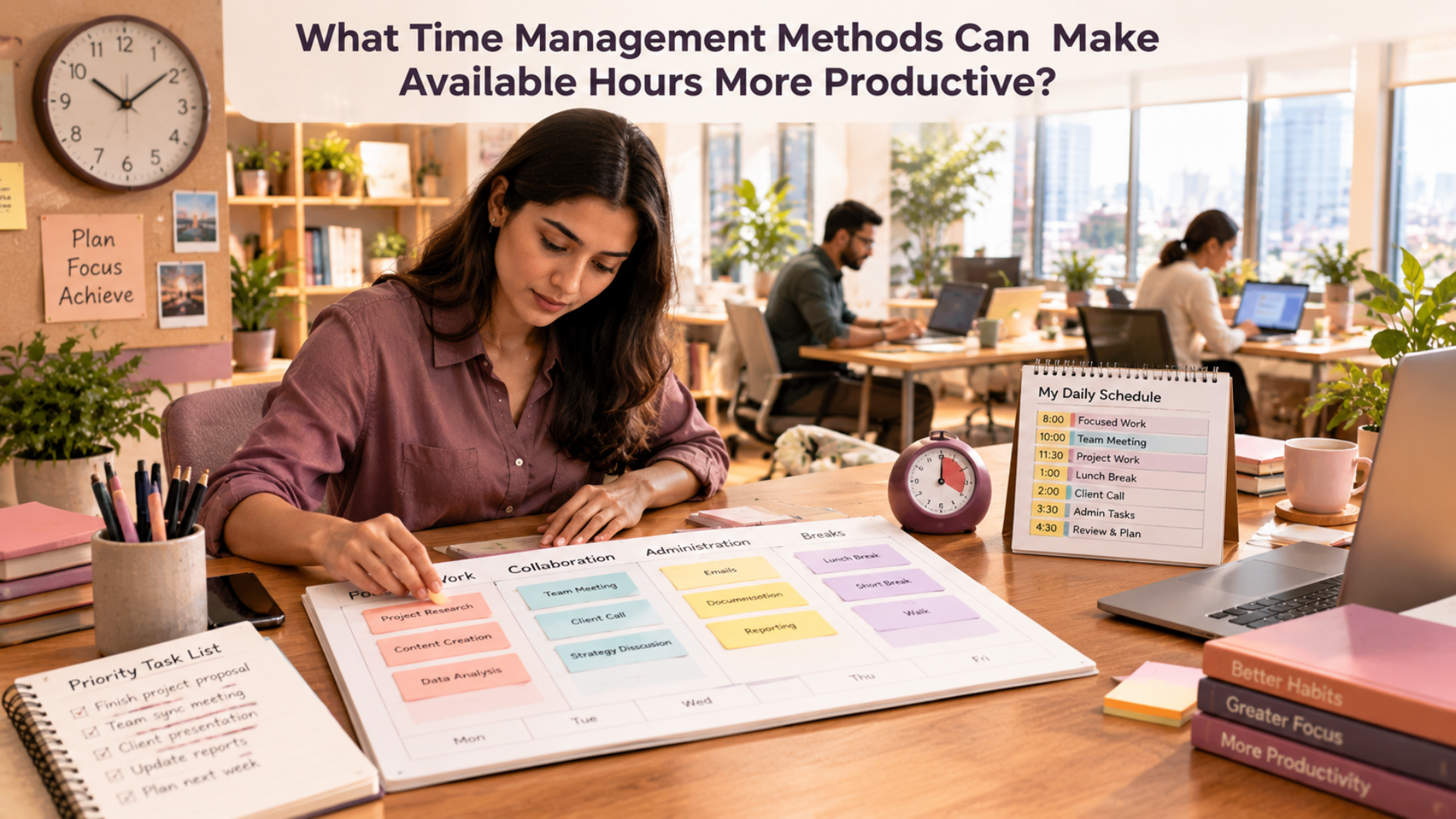
Knowing how many hours employees have available is only the beginning. Organizations must also consider how those hours are used.Effective time management methods can help employees organize priorities without turning every minute into a performance measurement. The goal should be to create enough structure for important work while leaving room for collaboration, problem-solving, and unexpected responsibilities.Useful approaches include:
Prioritizing high-value work
Employees can identify tasks that have the greatest business impact and complete them before lower-priority activities.
Grouping similar activities
Handling related tasks together can reduce unnecessary switching between applications, projects, and responsibilities.
Protecting focused work periods
Dedicated periods without unnecessary meetings can give employees more uninterrupted time for complex assignments.
Reviewing recurring activities
Regularly examining meetings, reports, administrative tasks, and approval processes can reveal activities that consume time without providing equivalent value.Good time management is therefore less about making employees work faster and more about helping them spend available capacity intelligently.
How Can Managers Prevent Excessive Working Hours?
Long working hours can sometimes appear to indicate strong commitment, but consistently extended schedules may signal poor planning, insufficient staffing, inefficient processes, or unrealistic deadlines.Managers should monitor patterns rather than celebrate excessive hours.Warning signs can include:
- Frequent overtime
- Repeated deadline extensions
- Employees handling several urgent projects simultaneously
- Increasing unfinished work
- Regular work outside scheduled hours
- Declining engagement or concentration
Instead of responding by asking employees to work longer, leaders should investigate the underlying cause. Sometimes a staffing adjustment or process improvement can solve a problem that additional hours cannot.
How Does Workload Balancing Improve Annual Capacity?
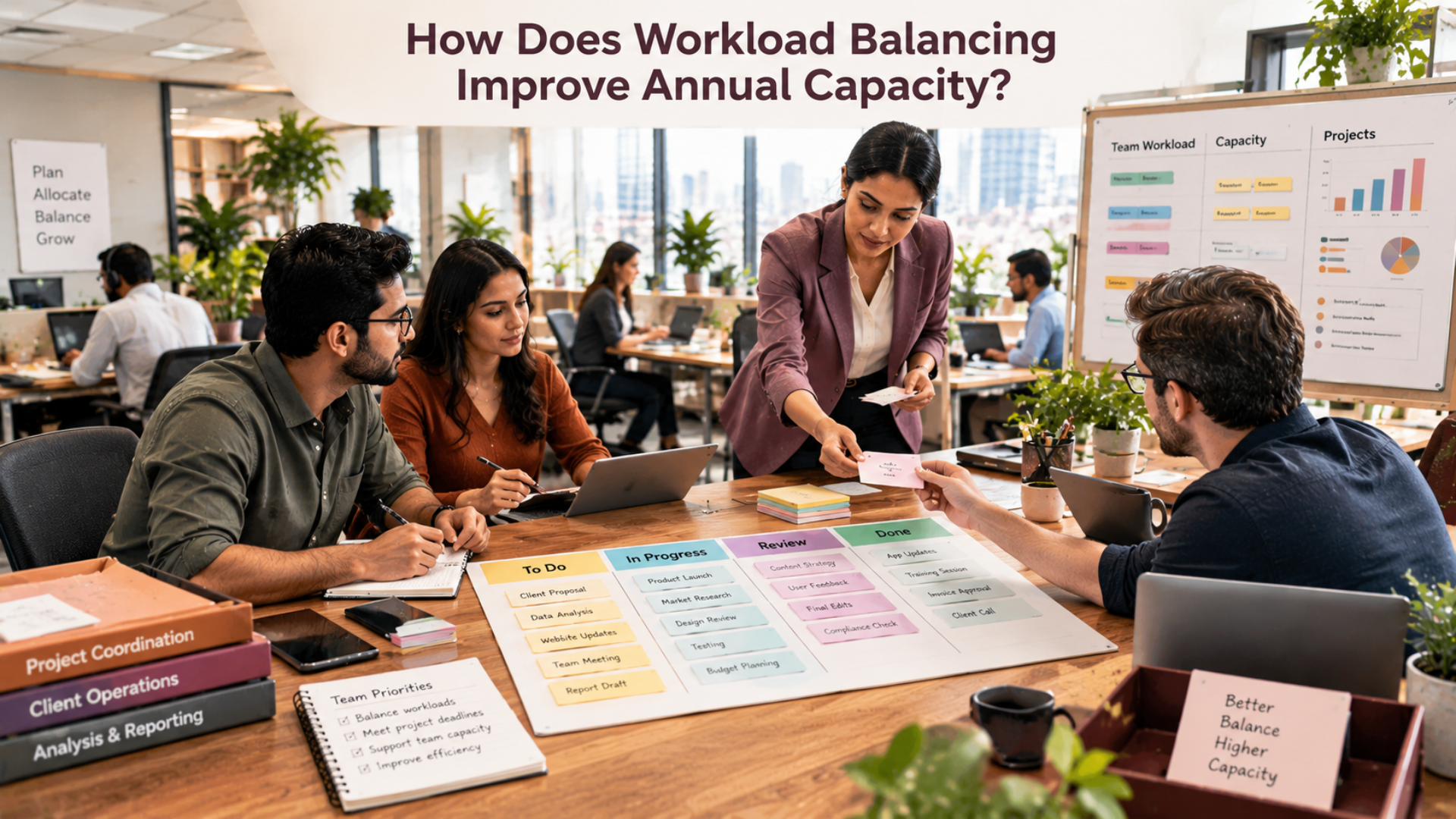
Once organizations understand employee availability, they can compare that capacity against actual demand. This is where workload balancing becomes important.Rather than distributing tasks equally, managers should consider complexity, deadlines, employee responsibilities, required skills, and available time. One employee may complete fewer assignments because those assignments require substantially more effort, while another may handle a larger volume of routine work.A balanced approach can involve:
- Reviewing workload across teams
- Identifying overloaded roles
- Moving suitable tasks between employees
- Matching assignments with relevant skills
- Adjusting deadlines when capacity is limited
- Planning additional resources before pressure peaks
This creates a healthier relationship between available working time and business expectations.
Can Annual Working Hours Help With Project Planning?
Yes. Project managers can use annual capacity estimates to determine whether teams have enough time to complete planned work.For example, a department may have ten employees, but annual capacity should not be treated as ten identical blocks of uninterrupted work. Employees may have meetings, training, leave, administrative duties, and responsibilities across multiple projects.Effective project planning therefore requires a realistic capacity buffer.Managers should distinguish between:
- Scheduled capacity: Hours employees are contractually or operationally expected to work.
- Available capacity: Hours remaining after planned absences and fixed responsibilities.
- Project capacity: Hours realistically available for specific project work.
- Effective capacity: Hours that can reasonably produce the expected output.
This distinction makes forecasts more realistic and reduces last-minute pressure.
What Should Businesses Review Before Changing Working Schedules?
Before changing annual schedules, organizations should examine employment contracts, applicable labor laws, employee agreements, public holidays, overtime rules, and internal policies.Businesses should also communicate changes clearly. Employees need to understand why schedules are changing, how their working time will be calculated, and what happens when additional hours are required.Technology can support this process by helping organizations track schedules, leave, attendance, overtime, and staffing requirements in one place. However, data should support managerial decisions rather than replace professional judgment.
You can also watch: Is AI Automation "Time Theft"? Gen Z Productivity vs. Traditional Management | Future of Work

Summary
Working hours year analysis gives businesses a practical way to understand workforce capacity, plan staffing, estimate project resources, and identify potential scheduling problems. When combined with sensible time planning and balanced workloads, annual working-hour calculations can help organizations improve efficiency while protecting sustainable working practices.
FAQ
How many hours does a full-time employee work in a year?
It depends on the weekly schedule, holidays, leave entitlement, and employment rules. A 40-hour weekly schedule provides a simple starting point, but actual working hours are usually lower after planned non-working days.
Why are annual working hours important?
They help businesses estimate workforce capacity, plan projects, manage staffing requirements, and understand potential overtime needs.
Do annual working hours measure employee productivity?
No. Annual hours indicate available or scheduled time, not the quality, value, or effectiveness of an employee's work.
Can annual-hour calculations help prevent burnout?
They can help identify unrealistic workloads and recurring overtime patterns, allowing managers to address capacity problems before they become persistent.
