How Can Face Recognition Attendance and Access Control Improve Modern Workplace Management?
How can businesses make attendance more accurate while controlling access to workplaces without creating unnecessary administrative work? Organizations increasingly need systems that can verify employees efficiently, maintain reliable attendance records, and strengthen entry management. Face Recognition Attendance and access control can combine identity verification with attendance tracking, helping businesses create a more streamlined approach to workplace entry and workforce administration.
Why Are Businesses Rethinking Traditional Attendance Systems?
Traditional attendance methods such as paper registers, swipe cards, and manual timesheets can create operational challenges as organizations grow. Employees may forget access cards, records can require manual corrections, and HR teams may spend time reconciling attendance information.A Face Recognition Attendance and access control approach can verify identity using biometrics and connect it with an attendance or access event.Potential advantages include:
- Faster employee verification at entry points
- Reduced dependency on physical access cards
- More consistent attendance records
- Lower administrative effort
- Better coordination between security and HR operations
The technology should be implemented with appropriate privacy safeguards, clear employee communication, and access controls.
How Does Facial Recognition Attendance Work?
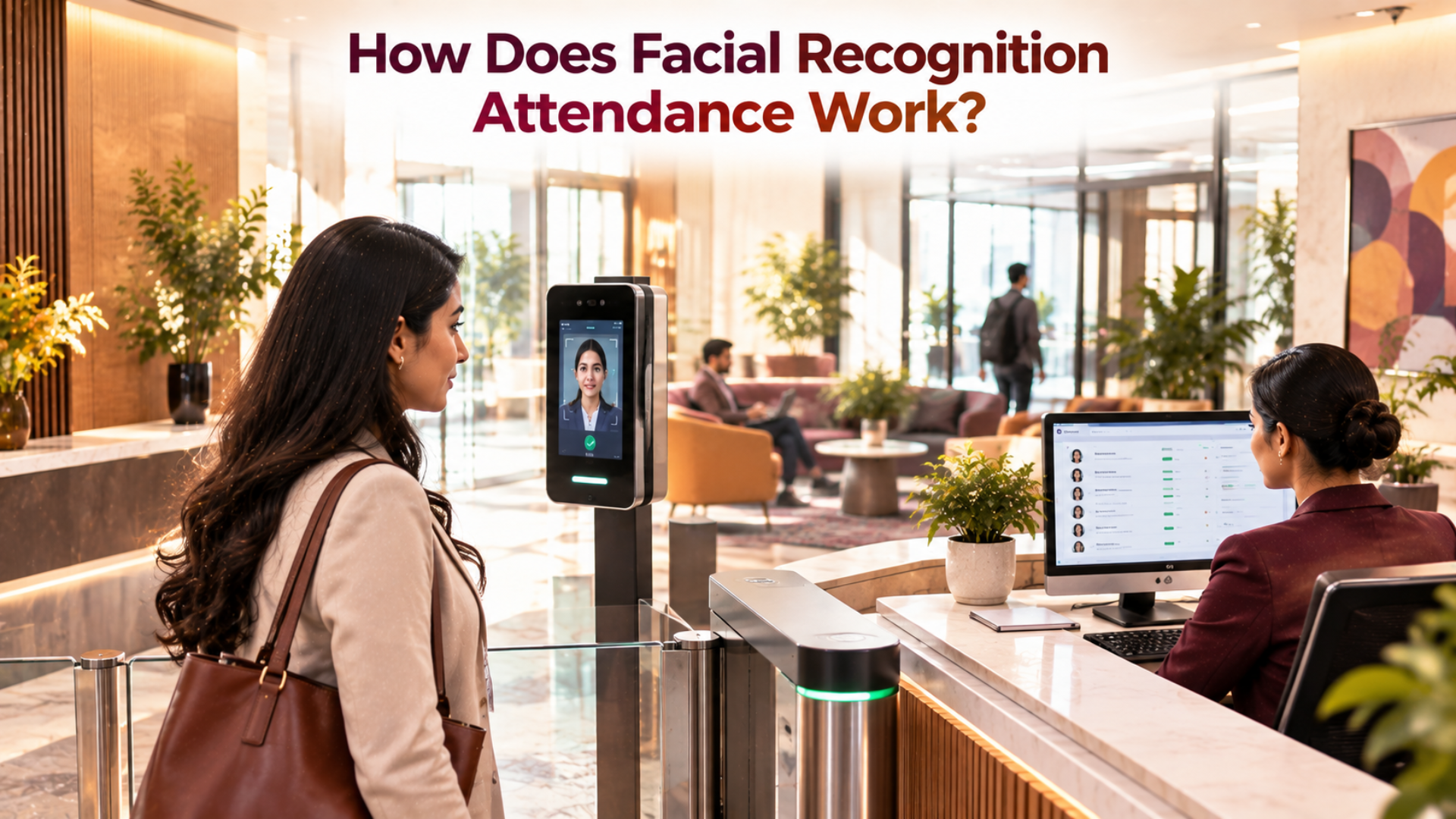
A typical system uses a camera or specialized biometric terminal to capture an individual's facial image and compare relevant features against an authorized profile.When the identity is successfully verified, the system can record the associated event according to configured business rules.A typical workflow may involve:
- Employee approaches an authorized terminal.
- The system detects and analyzes facial features.
- The captured characteristics are compared with an enrolled profile.
- A successful match records the appropriate attendance or access event.
- The event becomes available to authorized administrators.
The exact implementation depends on the technology provider, organizational policies, environmental conditions, and applicable privacy requirements.
Can One System Support Attendance and Workplace Entry?
Combining attendance and access management can help organizations connect two related activities. Instead of maintaining completely separate records for employee entry and working hours, businesses can establish coordinated workflows.For example, an authorized employee entering a designated workplace area may generate an access event while the attendance system records the relevant time. This can reduce duplicate administrative processes and provide HR and security teams with clearer operational information.However, access permissions and attendance rules should remain carefully defined. An employee being authorized to enter a building does not necessarily mean every area within that building should be accessible.
What Role Do Monitoring Applications Play?
Modern monitoring applications can help organizations organize information generated by workplace systems. Administrators may be able to review attendance events, access activity, exceptions, and system alerts through centralized interfaces.Useful features may include:
- Real-time event visibility
- Attendance summaries
- Exception notifications
- User and permission management
- Historical records
- Administrative reporting
The objective should be operational clarity rather than excessive employee surveillance. Businesses should define what information is collected, why it is required, who can access it, and how long it should be retained.
How Can Businesses Improve Access Security?
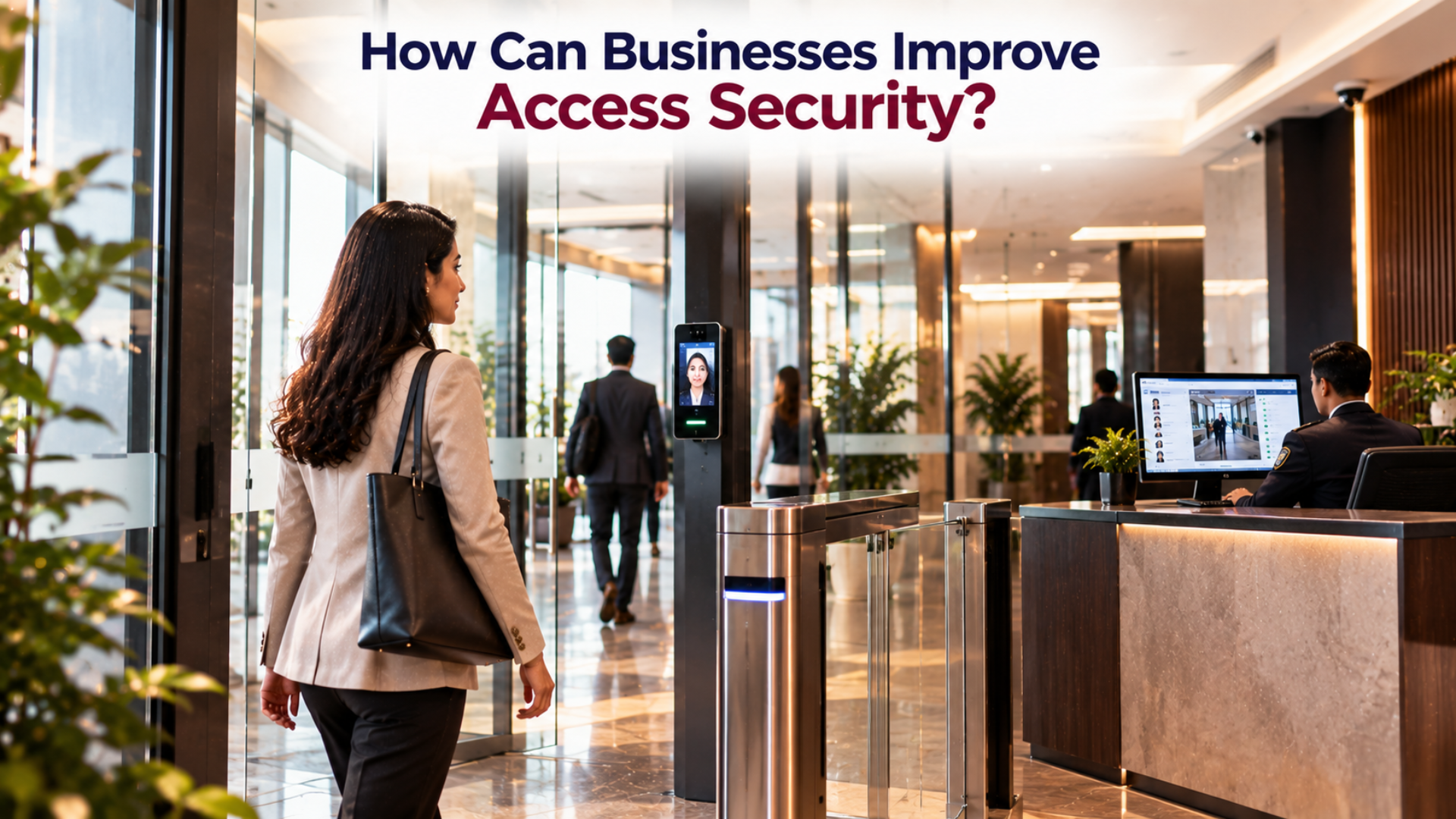
Access control is particularly important for offices, warehouses, educational facilities, healthcare environments, manufacturing sites, and other locations where different areas may have different authorization requirements.Facial verification can be combined with physical security infrastructure to create controlled entry points. Organizations can establish different permissions according to roles, departments, shifts, or designated areas.A practical access strategy may include:
- Authorized employee enrollment
- Role-based permissions
- Restricted-area controls
- Temporary access procedures
- Immediate access updates when roles change
- Audit records for security events
Technology should complement established security procedures rather than operate as the only protection layer.
How Can HR Teams Benefit From More Reliable Attendance Data?
Attendance information can affect scheduling, payroll preparation, workforce planning, and employee administration. When records require extensive manual correction, HR teams may spend unnecessary time checking discrepancies.A centralized biometric attendance solution can provide structured event information that HR professionals can review according to organizational policies. Exceptions can then be investigated rather than requiring every attendance record to be manually created.This can be especially useful for organizations with multiple shifts, large employee populations, or several workplace locations.
How Does Compliance Monitoring Fit Into Implementation?
Successful deployment requires more than installing cameras or biometric terminals. Organizations should establish procedures for reviewing system performance, access permissions, data handling, and operational policies.Compliance monitoring can help businesses regularly assess whether their processes continue to follow internal policies and applicable requirements. Reviews may examine authorization records, retention practices, access permissions, system configurations, and administrative activity.Regular assessments are particularly useful when organizations expand the technology to new locations or change how biometric information is processed.
What Privacy Considerations Should Businesses Address?

Biometric information requires careful handling because facial characteristics are highly sensitive forms of personal data in many regulatory environments. Organizations should therefore consider privacy requirements before introducing facial recognition systems.Businesses should evaluate:
- Whether biometric processing is legally appropriate
- What consent or notice requirements apply
- How biometric information is stored and protected
- Who can access related information
- Whether retention periods are clearly defined
- What alternatives are available where required
- How employees can raise concerns or request assistance
Clear policies can help employees understand the purpose and boundaries of the technology.
What Should Businesses Consider Before Choosing a System?
Organizations should evaluate technology based on actual operational requirements rather than selecting a platform solely because it offers facial recognition.Important considerations include:
- Recognition accuracy and reliability
- Integration with existing HR or security systems
- Scalability across locations
- Data protection capabilities
- Reporting and administration features
- Environmental suitability
- User experience
- Vendor support
- Configuration and maintenance requirements
Testing the system in the intended environment can also help businesses identify practical challenges before full deployment.
You can also watch: HR Strategies? LEAKED. EmpCloud Podcast: Ep 1 Loading #Shorts

Summary
Face Recognition Attendance and access control can connect employee verification, attendance records, and workplace access into a process. Businesses can benefit from faster identification, structured attendance information, and controlled entry when the technology is implemented with appropriate security and privacy practices. The most effective approach combines technology with clear policies, responsible data management, human oversight, and regular system reviews.
FAQ
Is facial recognition suitable for employee attendance?
It can be suitable for organizations that need automated identity verification, provided the system is implemented according to applicable privacy, employment, and data-protection requirements.
Can facial recognition replace access cards?
It can reduce reliance on physical cards in some environments, but businesses should determine whether biometric authentication is appropriate for their specific security requirements.
Does facial recognition improve attendance accuracy?
It can reduce certain problems associated with manual entry and shared or misplaced credentials, although performance depends on system quality, environmental conditions, enrollment, and implementation.
What should businesses consider before implementation?
Businesses should examine privacy requirements, security controls, accuracy, integration, scalability, employee communication, data retention, and administrative processes before deployment.
