How Can a Face Recognition Attendance System Improve Workforce Accuracy?
How can businesses make attendance records more accurate without creating extra administrative work? A modern Face recognition attendance system can help organizations automate employee identification, reduce manual attendance errors, and create more reliable records of when employees arrive and leave. By connecting attendance capture with everyday workforce processes, businesses can spend less time correcting records and more time managing people effectively.Unlike traditional registers or manual punch systems, facial recognition uses an employee's facial features to verify identity. This can make attendance recording faster while reducing common issues such as forgotten cards, shared credentials, duplicate entries, or manual data-entry mistakes.
What Problems Can Automated Attendance Solve?
Attendance management becomes difficult when organizations rely heavily on a Face recognition attendance system. HR may reconcile spreadsheets, investigate missing punches, correct incorrect entries, and respond to questions about attendance records. Common problems include:
- Forgotten access cards or identification badges
- Inaccurate manual entries
- Duplicate attendance records
- Unauthorized time entries
- Delayed reporting
- Difficulty monitoring attendance across multiple locations
- Administrative workload for HR teams
Automation can reduce these challenges by capturing attendance information consistently and making records available for authorized review.
How Does Facial Recognition Record Attendance?
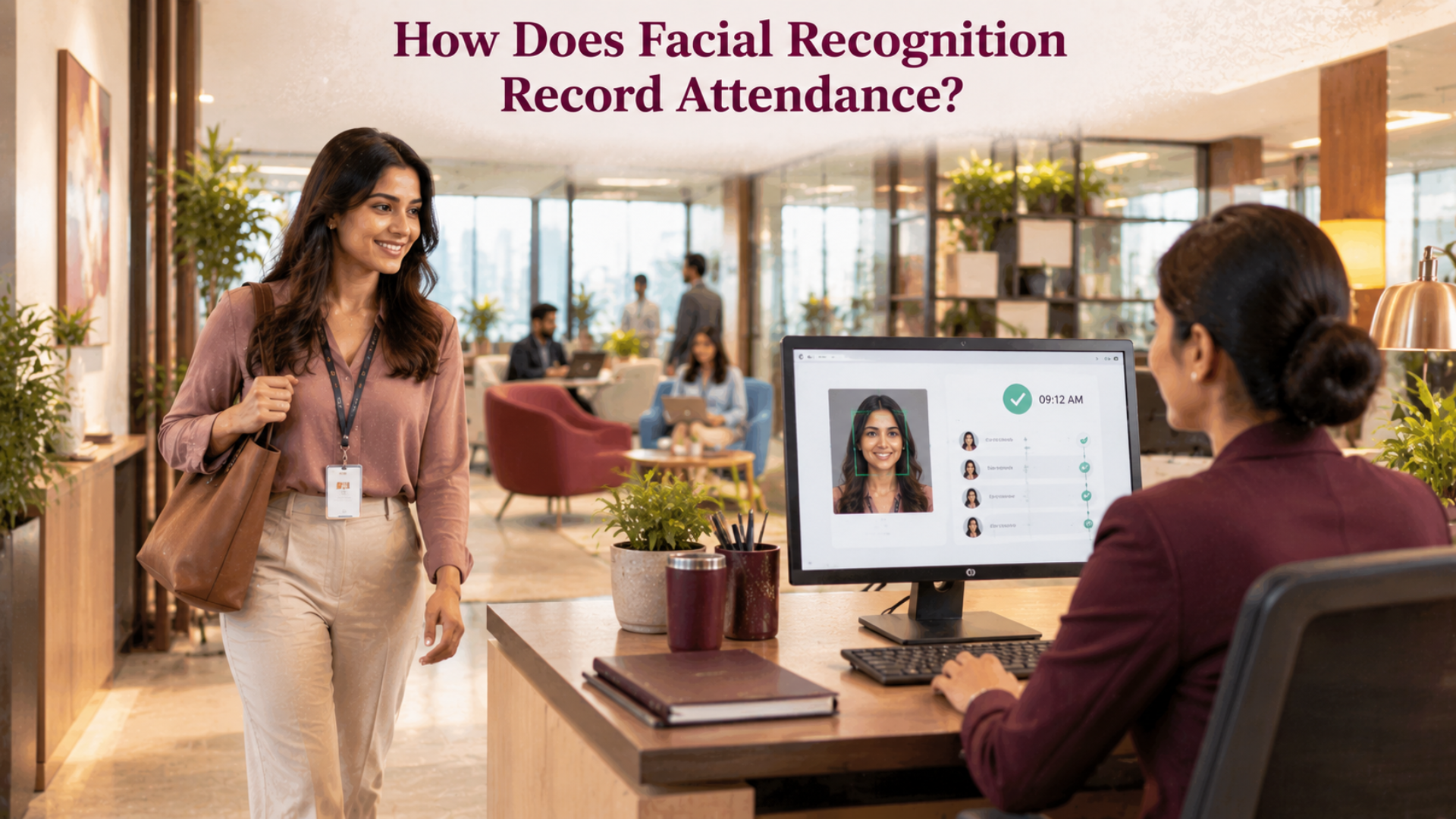
The process typically combines a camera, recognition software, employee profiles, and an attendance database.A simplified workflow looks like this:
- An employee approaches the designated attendance point.
- The camera captures facial characteristics.
- The system compares the captured information with an authorized employee profile.
- A successful match records the attendance event.
- The attendance information becomes available to authorized administrators.
The exact technology and verification method can vary between solutions. Organizations should therefore evaluate accuracy, security, privacy controls, integration capabilities, and environmental performance before deployment.
Why Is Accuracy Important for Attendance Management?
Attendance records influence more than daily presence. They may support payroll preparation, shift planning, overtime calculations, compliance processes, and workforce reporting.Even small inaccuracies can create unnecessary administrative work. For example, if an employee's attendance is recorded incorrectly, HR may need to investigate the issue, confirm the actual schedule, communicate with managers, and update the record.Reliable automated records can create a clearer operational foundation.However, accuracy should not be considered only in terms of facial matching. Businesses should also evaluate:
- Camera positioning
- Lighting conditions
- Recognition performance
- Employee enrollment quality
- Data synchronization
- Backup procedures
- Exception handling
A technically sophisticated system still needs sensible operational processes around it.
Should Businesses Take a Proactive or Reactive Approach to Attendance?

The difference between proactive vs reactive attendance management becomes important when organizations want to prevent recurring workforce problems.A reactive approach generally responds after an issue occurs. For example, HR may investigate repeated late arrivals only after attendance reports show a significant pattern.A proactive approach looks for patterns earlier. Managers can review recurring attendance issues, scheduling conflicts, shift coverage problems, and unusual absenteeism before they become larger operational concerns.This does not mean using attendance information to constantly monitor employees. Instead, organizations can use aggregated and appropriately governed information to understand whether workplace processes are creating avoidable problems.For example, repeated lateness in one department could indicate transportation challenges, unrealistic shift timings, or scheduling problems rather than simply an individual performance issue.
How Can Attendance Data Support Better Workforce Planning?
Once attendance information is captured consistently, organizations can use it alongside scheduling and workforce data to understand operational capacity.Managers may identify patterns such as:
- Frequently understaffed shifts
- Departments with recurring absenteeism
- High-demand periods
- Overtime requirements
- Scheduling mismatches
- Differences between planned and actual attendance
This information can help managers make more informed decisions about staffing and schedules.The goal should be to understand operational patterns rather than turn attendance data into an isolated employee score.
What Should Businesses Consider Before Implementation?
Technology should solve a genuine business problem, not simply be adopted because it is available. Before implementing facial recognition attendance, organizations should evaluate the practical and governance requirements.
Review privacy requirements
Facial information can be sensitive. Businesses should establish clear policies covering collection, storage, access, retention, and deletion.
Define legitimate use
Employees should understand why facial recognition is being introduced and how the resulting information will be used.
Plan for exceptions
Organizations need procedures for situations where recognition fails, cameras are unavailable, or an employee cannot use the normal attendance process.
Evaluate integration
The solution should work effectively with existing HR, payroll, scheduling, or workforce-management systems where integration is required.
Train administrators
HR and operations teams should understand how to manage records, handle exceptions, protect data, and respond to employee concerns.
Can an Attendance Tracker Work With Facial Recognition?
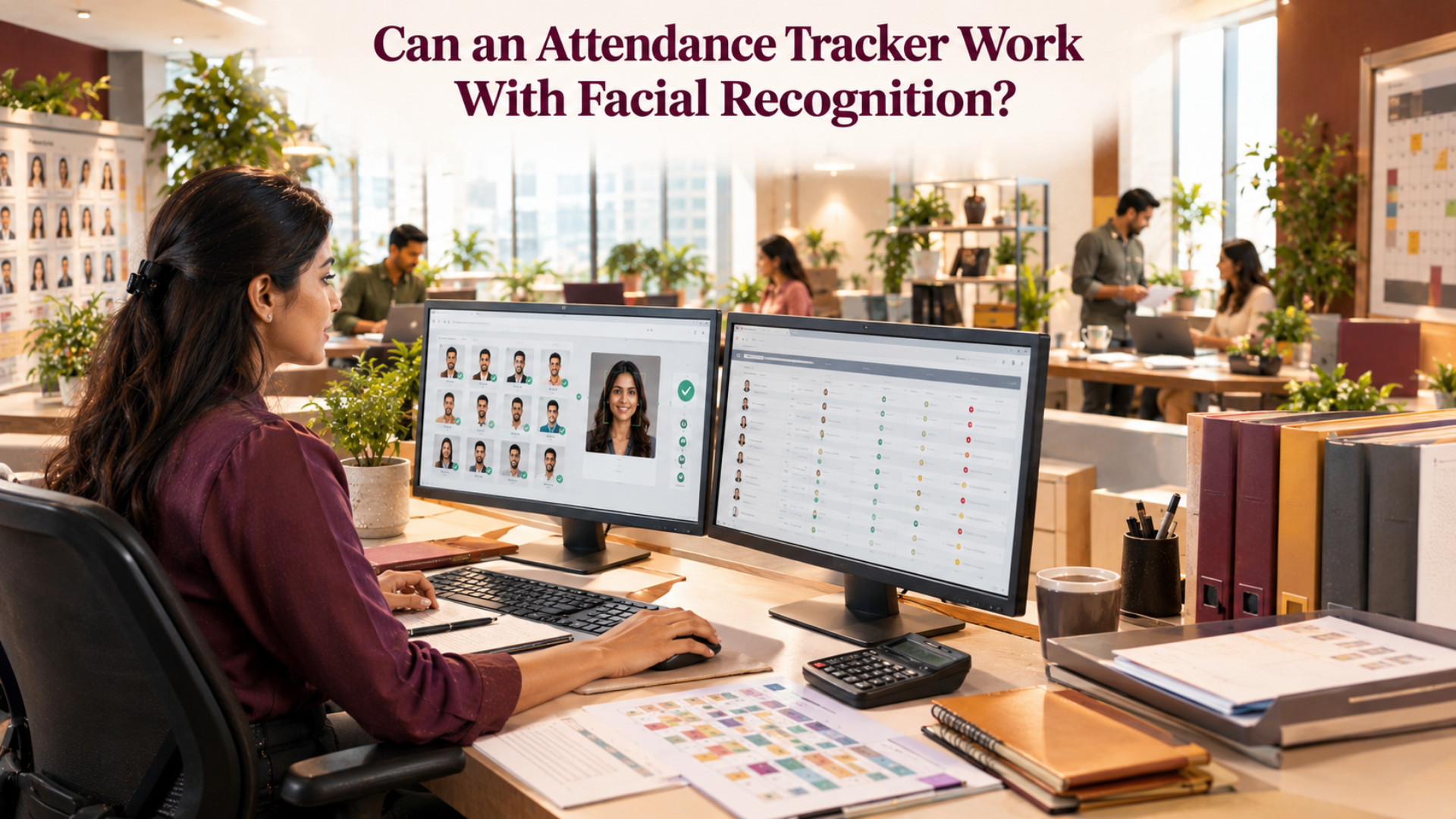
Yes. An attendance tracker can use facial verification as one method of capturing attendance events. The tracker may then organize information into daily, weekly, monthly, or department-level reports, depending on the capabilities of the platform.Businesses can use these reports to understand attendance trends, identify scheduling concerns, and support administrative processes.However, reporting should be designed around legitimate operational needs. Excessive data collection can increase privacy risks without necessarily improving workforce management.
How Can Employees Benefit From Automated Attendance?
When implemented responsibly, automated attendance can reduce some of the repetitive administrative processes surrounding attendance management.Employees may benefit from:
- Faster attendance recording
- Fewer manual corrections
- Reduced dependence on physical cards
- More consistent attendance records
- Easier resolution of attendance discrepancies
- Greater transparency around recorded attendance
The employee experience depends heavily on implementation. Clear communication and accessible support are therefore as important as the recognition technology itself.
What Makes a Face Recognition Attendance System Effective?
A successful solution requires more than accurate facial identification. Organizations should consider the complete experience surrounding the technology.An effective implementation should provide:
- Reliable identification under expected workplace conditions.
- Secure data handling with appropriate access controls.
- Clear employee communication about purpose and usage.
- Useful integrations with existing workforce systems.
- Exception procedures for unsuccessful or unavailable verification.
- Meaningful reporting that supports genuine operational decisions.
When technology, policy, security, and employee communication work together, attendance automation becomes more useful and sustainable.
You can also watch: How to Build HR Operations From the Ground Up | Ep. 6 ft. Harish Athreyas

Summary
A Face recognition attendance system can help businesses modernize attendance recording by automating identity verification, reducing manual errors, and improving the consistency of workforce records. Its greatest value comes when organizations combine reliable technology with strong privacy practices, transparent communication, sensible reporting, and well-defined operational processes.
FAQ
Is facial recognition suitable for employee attendance?
It can be suitable when the technology meets the organization's accuracy, privacy, security, legal, and operational requirements.
Does facial recognition eliminate attendance errors?
It can reduce certain manual errors, but no system eliminates every possible exception. Organizations still need procedures for technical failures and unusual attendance situations.
Can facial attendance data support payroll?
Attendance records can potentially support payroll-related processes when the system is appropriately integrated and configured, although payroll calculations may require additional information.
Is facial recognition attendance secure?
Security depends on how biometric information is collected, stored, accessed, transmitted, and eventually deleted. Businesses should assess these controls before implementation.
Should companies inform employees about facial recognition?
Yes. Clear communication about the purpose, data handling, access, retention, and employee rights can help build transparency and trust.
